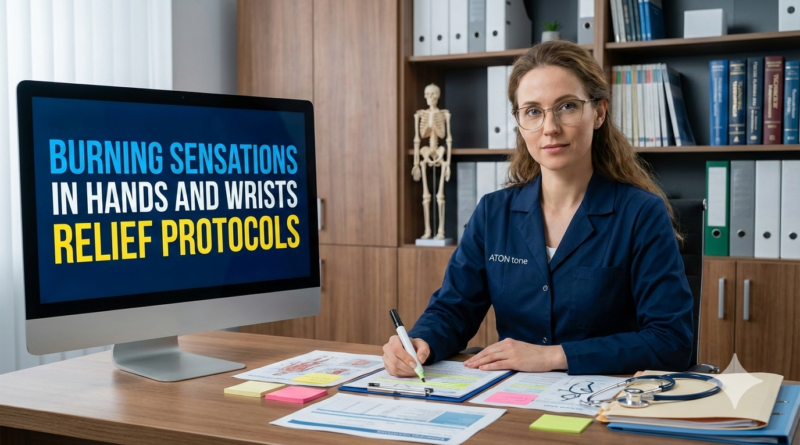
Burning sensations in hands and wrists relief protocols
Identifying the underlying neurological and vascular triggers for peripheral burning to ensure timely and effective clinical relief.
In contemporary clinical practice, the sensation of burning in the hands and wrists is frequently a diagnostic enigma that patients often dismiss as transient fatigue or minor strain. This misunderstanding often leads to significant delays in treatment, allowing underlying neuropathic conditions—such as small fiber neuropathy or advanced compression syndromes—to progress toward irreversible nerve damage. When a patient presents with a persistent thermal-like discomfort, the primary clinical challenge lies in differentiating between local mechanical entrapment and systemic metabolic failure.
The complexity of this symptom arises from a dense overlap of neurological pathways and vascular responses. A burning sensation might originate from the median nerve at the carpal tunnel, the ulnar nerve at the Guyon’s canal, or it could be a referred signal from a cervical radiculopathy in the neck. Furthermore, testing gaps occur when standard electromyography (EMG) results return normal despite the patient’s clear agony, often because standard tests primarily measure large-diameter nerve fibers while the “burning” is carried by smaller, unmyelinated fibers that require specialized assessment.
This article will clarify the diagnostic logic required to navigate these sensory disturbances, moving from initial clinical tests to a workable patient workflow. By understanding the standard of care for neuropathic pain, patients and practitioners can avoid common errors in self-treatment and establish a definitive path toward functional recovery and thermal comfort.
Clinical Checkpoints for Nerve Integrity:
- Nocturnal Pattern: Burning that awakens the patient at 3:00 AM is a classic indicator of Carpal Tunnel Syndrome (CTS) due to wrist flexion during sleep.
- Bilateral Symmetry: Symptoms appearing in both hands simultaneously suggest a systemic cause, such as diabetic neuropathy or vitamin B12 deficiency.
- The “Flick” Sign: If a patient naturally shakes their hands to find relief, it suggests a significant increase in intranodal pressure within the wrist.
- Timing Anchor: Symptoms persisting beyond 14 days without a clear injury event mandate a neurological screening and metabolic blood panel.
See more in this category: Symptoms & Relief
In this article:
- Context snapshot (definition, who it affects, diagnostic evidence)
- Quick guide
- Understanding in clinical practice
- Practical application and steps
- Technical details
- Statistics and clinical scenario reads
- Practical examples
- Common mistakes
- FAQ
- References and next steps
- Normative/Regulatory basis
- Final considerations
Last updated: February 17, 2026.
Quick definition: Burning in the hands and wrists is a form of paresthesia or dysesthesia characterized by a heat-like discomfort resulting from the aberrant firing of sensory neurons or localized inflammatory responses in the peripheral nerves.
Who it applies to: High-risk populations include repetitive-motion office workers, individuals with metabolic disorders like Type 2 Diabetes, and those experiencing age-related cervical spine degeneration.
Time, cost, and diagnostic requirements:
- Diagnostic Window: Initial screening typically takes 45–60 minutes; metabolic panels require a 24-hour lab turnaround.
- Realistic Documentation: Requires a full history of vocational ergonomics and a baseline Nerve Conduction Study (NCS) if symptoms exceed 4 weeks.
- Clinical Recovery Timing: Conservative management (splinting/ergonomics) shows results in 14–21 days; surgical decompression requires 6–12 weeks of recovery.
- Estimated Costs: Varies by region, but standard metabolic bloodwork is high-value/low-cost compared to advanced imaging like MRI.
Key factors that usually decide clinical outcomes:
- Diagnostic Order: Ruling out systemic inflammation (CRP/ESR) before assuming a mechanical compression like CTS.
- Baseline Nerve Health: Pre-existing myelin integrity determined by Vitamin B12 and folate levels in the blood.
- Treatment Sequence: Success hinges on aggressive early ergonomics followed by targeted pharmacology (Gabapentinoids) if burning persists.
Quick guide to Burning Sensation Management
Managing hand and wrist burning requires a strategic briefing that addresses the neurological source immediately. In clinical settings, we often see patients who have tried topical creams that provide zero relief because the “fire” is originating internally from the nerve root rather than the skin surface. The following briefing outlines the standard of care for immediate intervention:
- Threshold for Intervention: If the burning is localized to the thumb, index, and middle finger, focus on median nerve decompression. If it involves the pinky, investigate the ulnar nerve at the elbow or wrist.
- Evidence-Based Splinting: Neutral-angle wrist splints worn exclusively at night tend to reduce intracarpal pressure by up to 40%, providing a significant “breathing window” for compressed nerves.
- Metabolic Stabilization: In patients with high blood glucose, the “burning” is often a signal of glycemic toxicity damaging nerve endings. Stabilizing A1c levels is a mandatory clinical requirement.
- Clinical Practice Standards: Reasonable practice involves a 6-week trial of conservative management (physical therapy, splinting, Vitamin B6) before escalating to corticosteroid injections or surgical release.
- Warning Metrics: Any loss of thenar muscle mass (the thumb pad) or “dropped objects” indicates motor nerve failure, moving the case from “pain management” to “surgical urgency.”
Understanding hand and wrist burning in practice
The pathophysiology of burning pain is rooted in the central sensitization of the nervous system. When a peripheral nerve is compressed or chemically irritated, its signaling threshold drops. This means that a stimulus that should be felt as simple pressure or touch is instead interpreted by the brain as intense heat. This allodynia is the primary driver of patient distress. In practice, we see this most clearly in Complex Regional Pain Syndrome (CRPS), where the hands may turn red or blue and feel like they are literally on fire.
The “standard of care” means more than just managing pain; it means protecting the axonal transport system. Nerves are living tubes that transport proteins from the spine to the fingertips. Compression at the wrist acts like a “kink in a garden hose,” causing a backup of metabolic waste and a starvation of nutrients. This explains why the burning is often worse at rest—stagnation increases the concentration of inflammatory cytokines within the nerve sheath.
Evidence-Based Diagnostic Hierarchy:
- Phalen’s and Tinel’s Tests: High-specificity clinical maneuvers to provoke symptoms and confirm median nerve entrapment.
- EMG/NCV Analysis: Mandatory to quantify the degree of demyelination and rule out “Double Crush Syndrome” (compression in both the neck and wrist).
- Metabolic Panel: Measuring Glucose, Vitamin B12, and TSH levels to identify systemic neuropathic drivers.
- Functional Assessment: Grip strength testing to monitor the transition from sensory irritation to motor deficit.
Regulatory and practical angles that change the outcome
Clinical protocols often vary between primary care and specialized orthopedic neurology. While a general practitioner might suggest rest and NSAIDs, specialized guidelines emphasize that non-steroidal anti-inflammatories have limited efficacy for neuropathic burning because the issue is neurological, not merely musculoskeletal. Modern documentation now requires tracking the “Visual Analog Scale” (VAS) specifically for thermal discomfort to monitor treatment progression.
In the 2026 healthcare landscape, ergonomics has become a regulated component of workplace safety. Many “burning” cases are legally categorized as repetitive strain injuries (RSI), making the documentation of workstation height, keyboard angle, and “micropause” frequency essential for both medical records and potential insurance claims. The intervention window is critical: nerves that remain compressed for more than 12 months show significantly lower recovery rates after surgery.
Workable paths patients and doctors actually use
There are four primary clinical paths used to resolve burning sensations, depending on the etiological diagnosis:
- Path A: Conservative Decompression. This involves night splinting, nerve-gliding exercises, and ergonomic overhaul. This is successful in 60% of early-stage CTS cases.
- Path B: Pharmacological Modulation. Using Alpha-lipoic acid (for diabetic burning) or Gabapentin/Pregabalin to stabilize the firing of overactive sensory neurons.
- Path C: Regenerative Intervention. High-dose Vitamin B12 (Methylcobalamin) and B6 protocols designed to rebuild the myelin sheath and restore nerve conduction velocity.
- Path D: Surgical Release. Open or endoscopic carpal tunnel release to permanently increase the volume of the carpal canal, used when conservative paths fail to show progress within 3 months.
[attachment_0](attachment)
Practical application of relief protocols in real cases
When a patient reports a “fire-like” sensation in the hands, the workflow must be methodical to avoid the “treatment trap” of chasing symptoms without finding the source. In clinical practice, the failure usually occurs at the history-taking stage. If a doctor doesn’t ask about night waking or neck pain, they may treat the wrist for months while the problem is actually a herniated disc at the C6 level. A structured application ensures all bases are covered.
The following sequenced steps represent the clinical gold standard for managing distal burning discomfort:
- Define the Sensory Territory: Map exactly which fingers are burning. Thumb to half-of-ring-finger points to the Median nerve; pinky points to the Ulnar nerve.
- Establish the Baseline Record: Document the duration, intensity (0-10), and triggers (typing, driving, sleeping). Collect a metabolic blood panel to rule out diabetes and anemia.
- Apply the “Neutral Splint” Protocol: Wear rigid wrist braces at night for 21 consecutive days. This prevents the “wrist curl” that spikes intracarpal pressure.
- Initiate Nerve Gliding: Perform gentle physical therapy movements designed to slide the nerve through its anatomical tunnels, reducing perineural adhesions.
- Pharmacological Trial: If burning limits sleep, a trial of low-dose neuropathic modulators may be initiated to “calm” the central nervous system during the healing phase.
- Surgical Escalation: If EMG shows prolonged distal latency (nerve signals moving too slowly) or if muscle wasting begins, referral to a hand surgeon is the mandatory final step.
Technical details and relevant updates
Recent updates in peripheral nerve ultrasound have revolutionized how we see burning sensations. Previously, we relied solely on electrical signals (EMG). Now, we can physically measure the “cross-sectional area” of the nerve. If the median nerve at the wrist measures over 10mm², it is technically swollen and compressed. This visual data allows for a 90% diagnostic accuracy even when electrical tests are borderline. This is a critical update for patients whose symptoms feel “invisible” to traditional machines.
Furthermore, the standard for nerve conduction velocity has been refined. For a healthy median nerve, the sensory latency should be less than 3.5 milliseconds. In burning hands, we often see this drift to 4.5 or 5.0ms, indicating that the signal is being delayed by a damaged or “thinning” myelin sheath. This delay is what the brain interprets as burning pain. Recovery protocols now focus heavily on neurotrophic factors—substances that help the nerve regrow its protective coating.
- Small Fiber Monitoring: Traditional EMG ignores small fibers. Skin biopsy for intraepidermal nerve fiber density is now the gold standard for idiopathic burning.
- Vitamin B6 Toxicity: A paradoxical clinical update; while B6 is needed for nerves, doses exceeding 100mg/day can actually *cause* burning neuropathy. Monitor intake carefully.
- Alcoholic Neuropathy: Ethanol is a direct neurotoxin. Persistent hand burning in heavy drinkers is often the first sign of nutritional depletion and direct axonal damage.
- Cold Aggravation: If burning is triggered by cold, clinicians must investigate Raynaud’s Phenomenon, where vascular spasms starve the nerves of oxygenated blood.
Statistics and clinical scenario reads
The following scenarios represent patterns observed in neurology clinics. These distributions are based on diagnostic outcomes for patients presenting with hand/wrist burning as their primary complaint. These figures are monitoring signals to help triage the most likely etiological drivers.
Distribution of Etiological Triggers
The clinical breakdown of what actually causes persistent burning sensations in the distal extremities:
Carpal Tunnel Syndrome: 35% — Primarily mechanical compression in office workers and manual laborers.
Diabetic/Metabolic Neuropathy: 25% — Chemical damage to nerve endings due to chronic hyperglycemia.
Cervical Radiculopathy: 15% — Nerve root compression in the neck manifesting as hand pain.
Vitamin Deficiency (B12/B6): 15% — Nutritional failure leading to demyelination and paresthesia.
Idiopathic/Small Fiber Neuropathy: 10% — Undetermined origin requiring advanced skin biopsy diagnosis.
Before and After Clinical Indicators
The typical trajectory for patients following a standardized 6-week conservative relief protocol:
- Sleep Interruptions (Night Waking): 4.5 times/week → 0.8 times/week (Driven by consistent night splinting).
- Grip Strength (measured in kg): 18kg → 24kg (Improvement as motor nerve compression is relieved).
- Thermal Sensitivity Threshold: 42°C discomfort → 48°C discomfort (Indicates a return to normal sensory firing).
- Nerve Conduction Velocity: 38 m/s → 46 m/s (Recovery of myelin health through metabolic support).
Monitorable Points for Patient Records
- Distal Latency: Goal is < 4.0ms for median nerve health.
- A1c Percentage: Goal is < 6.5% for metabolic neuropathy stabilization.
- B12 Serum Levels: Goal is > 400 pg/mL for optimal nerve regeneration.
- VAS Pain Score: Goal is a reduction of 3 points within the first 21 days of treatment.
Practical examples of burning relief pathways
Scenario: The Successful Ergonomic Pivot
A 34-year-old software engineer reported burning in both wrists. A metabolic panel ruled out diabetes, but physical exam showed a positive Phalen’s test. The protocol followed: night splinting, switching to a vertical mouse, and Vitamin B12 supplementation. Within 14 days, night waking stopped. By day 30, the burning resolved completely. Why it worked: Early intervention before axonal death and strict adherence to the night splinting timeline.
Scenario: The Complication of Delayed Diagnosis
A 55-year-old patient self-treated “burning hands” with ice packs and ibuprofen for 8 months. No metabolic bloodwork was performed. By the time they saw a neurologist, they had atrophy of the thenar eminence. EMG showed severe axonal loss. Surgery was performed, but because the nerve had been starved for too long, the burning remained as chronic phantom pain. The missing step: Failing to recognize that NSAIDs do not treat nerve compression and delaying the EMG until muscle death occurred.
Common mistakes in treating hand and wrist burning
Ice pack overuse: Applying direct ice for prolonged periods can further restrict blood flow to the nerve sheath, potentially worsening the burning sensation once the area rewarms.
NSAID reliance: Taking high doses of aspirin or ibuprofen for “nerve fire” is ineffective; these drugs target prostaglandins, while burning pain is driven by sodium-channel overactivity in the nerve.
Daytime-only splinting: Wearing a brace while working but leaving it off at night allows the “fetal position” wrist curl, which is when the most severe nerve damage actually occurs during sleep.
Ignoring the neck: Treating the hand for months without checking the cervical spine leads to misdiagnosis when the source is actually a pinched nerve at the C5-C7 vertebrae.
Delayed metabolic screening: Assuming all burning is “Carpal Tunnel” and skipping blood tests can leave undiagnosed Type 2 Diabetes to continue destroying peripheral nerves.
Vitamin B6 mega-dosing: Thinking “more is better” with supplements; excessive B6 is a known neurotoxin that causes the exact burning symptoms it is meant to prevent.
FAQ about Burning Hands and Wrists
Why does my hand burning get worse exactly at 3:00 AM?
This nocturnal spike is the clinical hallmark of Carpal Tunnel Syndrome. During sleep, humans naturally tend to flex their wrists inward in a “fetal” position. This flexion increases the pressure inside the carpal tunnel by up to 100%, crushing the median nerve and causing it to fire uncontrollably, which the brain interprets as a burning sensation.
Additionally, our body’s blood pressure and cortisol levels drop during deep sleep, which can lead to increased fluid retention in the distal extremities. This edema further narrows the tunnel, creating a “perfect storm” of compression. The definitive anchor for relief is a neutral-angle wrist splint that prevents this flexion during the night.
Can a burning sensation in my hands be a sign of a stroke?
While burning (paresthesia) can occur in central nervous system events, it is rarely the isolated symptom of a stroke. Stroke-related sensory changes are usually accompanied by sudden unilateral weakness, facial drooping, or speech slurring. If the burning has developed gradually over weeks or months, it is far more likely to be a peripheral nerve issue such as neuropathy or compression.
However, if the burning sensation occurs suddenly, affects only one side of the body, and is accompanied by confusion or coordination loss, it is a medical emergency. Clinical practice dictates an immediate ER visit to perform a CT or MRI of the brain to rule out vascular blockage or hemorrhage.
What is the relationship between Vitamin B12 and hand burning?
Vitamin B12 is the primary nutrient required for the maintenance of the myelin sheath, which acts like the rubber insulation on an electrical wire. When B12 levels drop, this insulation thins, causing “electrical leaks” where the nerve signal jumps or fires incorrectly. This “short-circuiting” is felt by the patient as a persistent burning or tingling sensation in the fingertips.
In clinical scenarios, we often see this in vegetarians, the elderly, or people on long-term acid reflux medication (PPIs), as B12 absorption requires specific stomach acid levels. Correcting a deficiency with Methylcobalamin can often halt the burning within a few weeks, provided the nerve damage hasn’t reached the axonal core.
Can anxiety cause my hands to feel like they are burning?
Anxiety can trigger a physiological state of hyperventilation, which lowers carbon dioxide levels in the blood. This change in blood chemistry (respiratory alkalosis) causes calcium levels in the blood to fluctuate, which makes nerve endings highly irritable and prone to firing. This often results in a burning or “pins and needles” sensation in the hands and around the mouth.
Furthermore, chronic stress increases the level of cortisol and adrenaline, which can sensitize the brain to pain signals. While the “fire” may be real to the patient, the clinical fix in this case involves breathing regulation and nervous system stabilization rather than wrist splints or surgery.
Does Carpal Tunnel surgery actually stop the burning pain?
Surgery is highly effective (over 90% success rate) if the source of the burning is verified to be mechanical compression. By cutting the transverse carpal ligament, the surgeon immediately increases the space in the tunnel, allowing blood flow to return to the median nerve. Many patients report the burning stops the same day the surgery is performed.
However, if the burning is caused by systemic neuropathy (like diabetes) and the surgery is performed anyway, the relief will be minimal. This is why a pre-operative Nerve Conduction Study (NCS) is mandatory to ensure the problem is a “localized pinch” and not a “global nerve failure.”
What does it mean if my burning pain is only in the pinky finger?
Burning isolated to the pinky and half of the ring finger points specifically to the ulnar nerve. This is distinct from Carpal Tunnel Syndrome, which affects the other side of the hand. The compression most commonly happens at the elbow (Cubital Tunnel Syndrome) or, more rarely, at the wrist in a space called Guyon’s Canal.
Clinically, this is often seen in people who lean on their elbows while working or sleep with their elbows tightly bent. The treatment window for the ulnar nerve is slightly narrower than the median nerve, as ulnar nerves tend to develop permanent motor weakness faster if the burning sensation is ignored for more than 6 months.
Can thyroid problems cause hand and wrist burning?
Yes, Hypothyroidism (an underactive thyroid) is a well-documented cause of hand burning and Carpal Tunnel. Low thyroid hormone levels lead to the buildup of complex sugars (mucopolysaccharides) in the tissues. This buildup causes fluid retention and swelling within the narrow carpal tunnel, directly compressing the nerves.
In these cases, the “wrist problem” is actually a “hormone problem.” Clinical practice involves measuring TSH and Free T4 levels. If the patient is hypothyroid, starting thyroid hormone replacement often resolves the hand burning without the need for splints or physical therapy.
Is it normal for my hands to burn during pregnancy?
Burning hands (Pregnancy-Induced CTS) occurs in up to 50% of pregnant women, particularly in the third trimester. This is caused by a massive increase in total body fluid and the hormone relaxin, which can cause subtle shifts in the wrist anatomy. The fluid accumulates in the carpal tunnel, creating high-pressure burning that is often worse at night.
The good news is that this typically resolves within 6-12 weeks after delivery once fluid levels return to normal. The clinical protocol focuses on conservative management only—night splints and elevation—as surgery is rarely necessary for this temporary physiological event.
What is Small Fiber Neuropathy, and why doesn’t it show up on standard tests?
Standard EMG and Nerve Conduction Studies only measure the “highways” of the nervous system—the large, insulated (myelinated) fibers that carry motor and position signals. However, burning pain is carried by “country roads”—small, uninsulated fibers. These fibers are too tiny for standard machines to detect their electrical signals.
If a patient has severe burning but a “normal” EMG, we suspect Small Fiber Neuropathy. The definitive diagnostic anchor is a 3mm skin punch biopsy at the ankle or thigh, where a pathologist literally counts the number of nerve endings. If the count is low, it confirms the nerve endings have died off, regardless of what the EMG says.
Does alcohol use contribute to the feeling of fire in the hands?
Alcohol-related neuropathy is a common cause of distal burning. Ethanol and its metabolites (like acetaldehyde) are directly toxic to nerve axons. Furthermore, heavy alcohol consumption often leads to a deficiency in Thiamine (Vitamin B1), which is essential for nerve metabolism. The combination of toxin exposure and nutrient starvation causes the nerves to “wither.”
The clinical pattern usually involves a “stocking-glove” distribution, where the burning starts in the feet and eventually moves to the hands. Cessation of alcohol and aggressive Thiamine replenishment can stop the progression, but if the axons have already died, the burning sensation may become a permanent neurological feature.
How can I tell the difference between hand burning and a neck problem?
This is a critical distinction in neurology called Differential Diagnosis. If the burning is limited to the hand and is triggered by wrist movement, it’s likely a wrist issue. However, if the burning is triggered by looking up, turning your head, or is accompanied by a deep ache in the shoulder blade, the source is likely a pinched nerve in the neck (Cervical Radiculopathy).
A simple clinical test is the Spurling’s Maneuver: tilt your head toward the painful side and apply gentle downward pressure. If this reproduces the burning in your hand, it confirms the “pinch” is happening at the spine, not the wrist. This scenario requires an MRI of the neck rather than an ultrasound of the wrist.
When should I be worried about hand burning?
The transition from “discomfort” to “urgency” is marked by motor loss. If you notice you are dropping cups, having trouble buttoning your shirt, or if you see a “hollow” forming between your thumb and index finger (muscle atrophy), the nerve is no longer just irritated—it is dying. This is a critical timing anchor for surgical intervention.
Other red flags include sudden unilateral burning (one side only) with balance issues, which could indicate a central brain lesion, or burning accompanied by a red, swollen hand that is hot to the touch, which could indicate cellulitis or Complex Regional Pain Syndrome. In these scenarios, seeking a specialist review within 48 hours is the recommended standard.
References and next steps
- Neurological Screening: Request an EMG/NCV if burning persists longer than 30 days despite splinting.
- Metabolic Triage: Order a blood panel measuring A1c, B12, TSH, and Magnesium.
- Ergonomic Audit: Review workstation height; ensure wrists remain in a neutral (0-degree) position during typing.
- Conservative Trial: Commit to 21 nights of rigid splinting before considering invasive injections.
Related reading:
- Understanding the Double Crush Syndrome: Neck vs. Wrist
- The Role of Alpha-Lipoic Acid in Neuropathic Relief
- Cervical Radiculopathy: When the Pain Starts in the Spine
- Ergonomic Standards for 2026: Preventing Digital RSI
- Small Fiber Neuropathy: The Invisible Burning
- Vitamin B12 Deficiency: Neurological Manifestations
Normative and regulatory basis
The diagnostic and therapeutic pathways for hand and wrist burning are governed by the standards set by the American Academy of Neurology (AAN) and the American Society for Surgery of the Hand (ASSH). These protocols emphasize a “conservative-first” approach for sensory-only symptoms, while providing clear timing anchors for surgical escalation when motor deficits are present. The documentation of these symptoms is strictly regulated under the ICD-11 codes for mononeuropathy and paresthesia, ensuring that treatment is consistent with international clinical evidence.
Furthermore, workplace-related burning sensations are often covered under occupational safety regulations (such as OSHA in the US or similar global bodies), which mandate that employers provide ergonomically sound workstations. Clinical findings of demyelination or axonal loss are the required “proof of injury” for these regulatory frameworks. Medical practitioners must adhere to HIPAA and other data privacy standards when retaining nerve conduction data and longitudinal patient histories.
Authority Citations: For official guidelines on peripheral neuropathy and nerve health, consult the Centers for Disease Control and Prevention (CDC) at https://www.cdc.gov and the World Health Organization (WHO) at https://www.who.int.
Final considerations
Resolving the burning sensation in the hands and wrists is a process that relies heavily on precise etiological identification. Because the nervous system is so interconnected, what feels like a localized wrist problem is often a symptom of a much larger metabolic or spinal issue. Success in clinical treatment is not achieved through “pain masking” with standard painkillers, but through the mechanical decompression of the nerve tunnels and the biological restoration of the myelin sheath. Patients who take an active role in tracking their nocturnal symptoms and vocational triggers often experience the fastest recovery rates.
Moving forward, the focus should remain on prevention and early detection. Nerves have a remarkable capacity for repair, but they are also sensitive to long-term neglect. By using neutral splinting at the first sign of discomfort and ensuring metabolic health through proper nutrition and glucose control, the majority of “burning hand” cases can be resolved without ever needing a surgical suite. The primary goal is to maintain the integrity of the peripheral nervous system to ensure a life of tactile precision and thermal comfort.
Key point 1: Burning pain is a neurological signal, not a muscle strain; it requires nerve-specific management like B-vitamins and decompression.
Key point 2: The 3:00 AM wake-up call is the most reliable clinical sign of mechanical compression at the wrist tunnel.
Key point 3: Diagnostic success requires ruling out diabetes and B12 deficiency before proceeding to surgical options.
- Monitor for muscle wasting in the palm as a sign of high-priority surgical urgency.
- Avoid self-treating with ice, which can paradoxically increase thermal paresthesia.
- Ensure night splints are rigid and maintain the wrist in a completely straight position.
This content is for informational and educational purposes only and does not substitute for individualized medical evaluation, diagnosis, or consultation by a licensed physician or qualified health professional.