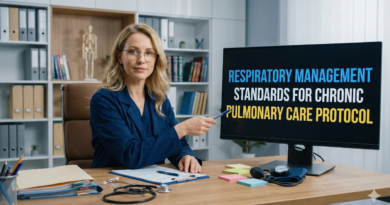

Pulmonology clinical standards and respiratory mechanics assessment
Optimizing the ventilation-perfusion interface through rigorous assessment of respiratory mechanics ensures systemic oxygenation stability.
Pulmonology is often reduced in the public imagination to the simple act of inhaling and exhaling, yet in clinical practice, it represents the intricate management of pressure gradients, gas diffusion, and acid-base homeostasis. The respiratory system is a high-stakes mechanical pump coupled with a delicate chemical exchanger; when this system falters, the breakdown is rarely isolated to the lungs alone. The friction in managing respiratory pathology lies in the fact that breathing is the only vital function that is both autonomic and voluntary, masking early signs of failure until the physiological reserves are completely exhausted.
The complexity of the field stems from the invisible nature of the primary organs and the overlap of symptoms. Dyspnea (shortness of breath) is a non-specific complaint that can originate from the heart, the blood, the lungs, or the mind. Differentiating between an obstructive process, where air is trapped inside, and a restrictive process, where the lungs cannot expand, requires a deep understanding of pulmonary mechanics. Diagnostic gaps frequently occur when clinicians rely solely on oxygen saturation (SpO2) while ignoring ventilation (CO2 removal), leading to catastrophic outcomes in patients with chronic retention.
This article clarifies the fundamental mechanics of breathing, the diagnostic standards for evaluating lung function, and the clinical logic required to interpret pulmonary data. We will explore the physics of compliance and resistance, the crucial difference between hypoxia and hypercapnia, and the workflow for assessing the dyspneic patient. Understanding these standards is the difference between simply administering oxygen and effectively managing the underlying respiratory failure.
- The Ventilation/Perfusion (V/Q) Ratio: The lungs must match air flow (ventilation) with blood flow (perfusion); a mismatch here is the primary cause of hypoxemia in clinical settings.
- The “Work of Breathing” Metric: Visible use of accessory muscles (neck, intercostals) is a more sensitive indicator of impending failure than a blood gas result.
- Carbon Dioxide Narcosis: In patients with chronic lung disease, administering excessive oxygen can suppress the respiratory drive, causing fatal CO2 buildup.
- Mechanical Independence: Breathing relies on negative pressure created by the diaphragm; any disruption to the chest wall or neural drive compromises this vacuum.
See more in this category: Pulmonology & Vision Sciences
In this article:
- Context snapshot (definition, who it affects, diagnostic evidence)
- Quick guide
- Understanding in clinical practice
- Practical application and steps
- Technical details
- Statistics and clinical scenario reads
- Practical examples
- Common mistakes
- FAQ
- References and next steps
- Normative/Regulatory basis
- Final considerations
Last updated: February 13, 2026.
Quick definition: Pulmonology is the medical specialty dedicated to the anatomy, physiology, and pathology of the respiratory system, focusing on the diagnosis and management of diseases affecting the airways, lung tissue, and respiratory muscles.
Who it applies to: Patients with chronic airway diseases (Asthma, COPD), interstitial lung diseases, sleep-disordered breathing, and acute respiratory distress.
Time, cost, and diagnostic requirements:
- Diagnostic Timelines: Acute failure requires seconds-to-minutes assessment; chronic interstitial diagnosis may take months of serial imaging and biopsy.
- Procedural Standards: Pulmonary Function Tests (PFTs) are the gold standard for functional classification; Bronchoscopy allows for direct visual and histological sampling.
- Cost Anchors: Preventative inhaler therapy is cost-effective compared to the extreme burden of ICU mechanical ventilation for acute exacerbations.
Key factors that usually decide clinical outcomes:
- Early Recognition of Hypoxia: Identifying tissue oxygen starvation before it leads to end-organ damage or cardiac arrest.
- Preservation of Lung Volume: In chronic diseases, maintaining the maximum amount of functional lung tissue through smoking cessation and rehabilitation.
- Appropriate Device Usage: The efficacy of respiratory medication is 100% dependent on the patient’s ability to use inhalers and nebulizers correctly.
Quick guide to Respiratory Mechanics
- The Pump Handle Motion: The rib cage moves up and out while the diaphragm moves down; this increases thoracic volume and drops internal pressure, pulling air in.
- Elastic Recoil: Exhalation is typically passive; the lungs snap back like a rubber band. Loss of this elasticity (Emphysema) traps air inside.
- Mucociliary Escalator: The airways are lined with cilia that constantly sweep mucus and debris up to be swallowed; smoking paralyzes this defense mechanism.
- The Respiratory Drive: The brain primarily monitors CO2 levels, not Oxygen levels, to determine how fast and deep to breathe.
- Standard of Care: Always auscultate (listen) to the lungs on bare skin; listening through clothing filters out high-frequency sounds like wheezes or fine crackles.
Understanding Pulmonology in practice
The mechanics of breathing are governed by the laws of physics, specifically Boyle’s Law, which states that pressure and volume are inversely related. For a breath to occur, the diaphragm must contract and flatten, expanding the thoracic cavity. This expansion lowers the intrathoracic pressure below atmospheric pressure, creating a vacuum that sucks air into the lungs. In clinical pulmonology, pathology often arises when this mechanical pump is disrupted (e.g., neuromuscular disease, chest wall deformity) or when the airways themselves offer too much resistance to the flow.
[attachment_0](attachment)
Once air reaches the alveoli—the microscopic sacs at the end of the airways—the process shifts from mechanics to diffusion. The alveolar-capillary membrane is thinner than a sheet of tissue paper, allowing oxygen to cross into the blood and carbon dioxide to leave. This exchange is driven by pressure gradients. Diseases like Pulmonary Fibrosis thicken this membrane, making it difficult for oxygen to diffuse, causing hypoxemia even if the mechanics of breathing are normal. This distinction between “ventilatory failure” (mechanics) and “oxygenation failure” (diffusion) is the cornerstone of advanced diagnosis.
- Obstructive vs. Restrictive: The two main categories of lung disease. Obstructive (Asthma/COPD) is trouble getting air out. Restrictive (Fibrosis/Obesity) is trouble getting air in.
- Dead Space Ventilation: Areas of the lung that are ventilated with air but have no blood flow (e.g., Pulmonary Embolism), rendering the breath useless for gas exchange.
- Shunt Physiology: Blood that passes through the lungs without contacting air (e.g., Pneumonia/Edema filling the alveoli), leading to severe hypoxemia that does not respond well to supplemental oxygen.
- Compliance Check: Highly compliant lungs (Emphysema) are floppy and trap air; low compliance lungs (ARDS/Fibrosis) are stiff and require high pressures to inflate.
Regulatory and practical angles that change the outcome
The American Thoracic Society (ATS) and the Global Initiative for Chronic Obstructive Lung Disease (GOLD) set the standards for interpreting Pulmonary Function Tests (PFTs). These guidelines dictate that a diagnosis of COPD is confirmed only when the FEV1/FVC ratio is below 0.70 post-bronchodilator. This strict regulatory definition prevents misdiagnosis of asthma or normal aging as COPD. Clinicians must adhere to these metrics to justify insurance coverage for specific inhalers and oxygen therapy.
Practically, the concept of “Pack-Years” (packs smoked per day multiplied by years smoked) drives lung cancer screening protocols. Current USPSTF guidelines recommend annual Low-Dose CT scans for adults aged 50-80 with a 20 pack-year history. This screening is a critical intervention, as symptoms of lung cancer typically appear only in late, incurable stages. The “Standard of Care” dictates that pulmonologists actively calculate and document this risk score for every patient.
Workable paths patients and doctors actually use
Managing respiratory disease involves a step-wise approach that balances pharmacological support with physical rehabilitation. The most common pathways include:
- The Bronchodilation Path: Using beta-agonists (like Albuterol) and anticholinergics to relax the smooth muscle of the airways. This is the primary route for Obstructive diseases.
- The Anti-Inflammatory Path: Using Inhaled Corticosteroids (ICS) to reduce swelling in the airways. This is the cornerstone of Asthma management and frequent COPD exacerbations.
- The Mechanical Support Path: Utilizing CPAP (Continuous Positive Airway Pressure) for sleep apnea or BiPAP for ventilatory failure. These devices act as “pneumatic splints” to keep airways open or assist respiratory muscles.
- The Rehabilitation Path: Pulmonary Rehab is a structured program of exercise and education. It is clinically proven to reduce dyspnea and hospitalizations more effectively than many medications by retraining muscles to work efficiently in a low-oxygen environment.
Practical application of Respiratory Assessment
Evaluating a patient with respiratory distress requires a systematic approach that prioritizes immediate life threats before moving to detailed diagnostics. The workflow often breaks when clinicians focus on the monitor rather than the patient. A grounded assessment looks for the physical signs of the “work of breathing.”
- Inspection (The First 10 Seconds): Look at the patient from the door. Are they speaking in full sentences? Are they using accessory muscles (shoulders heaving)? Is there cyanosis (blue tint) around the lips?
- Vitals Analysis: Check Respiratory Rate (RR) and SpO2. Note that a “normal” saturation on high-flow oxygen can mask severe underlying failure.
- Auscultation Strategy: Listen to the posterior chest (back) first, starting at the bases where fluid accumulates. Compare left to right. Identify wheezes (musical, airflow obstruction) vs. crackles (velcro sound, fluid/fibrosis).
- Palpation and Percussion: Feel for symmetrical chest expansion. Percuss (tap) the chest wall; dullness indicates fluid (effusion/pneumonia), while hyper-resonance indicates trapped air (pneumothorax/COPD).
- Gas Exchange Verification: If the patient is distressed but saturation is normal, obtain an Arterial Blood Gas (ABG) to check for CO2 retention (hypercapnia) and acidosis.
- Functional Correlation: Review recent Spirometry. If the FEV1 is very low (<30%), the patient has minimal reserve and requires aggressive early intervention.
Technical details and relevant updates
A significant technical update in pulmonology is the understanding of biologics in severe asthma. We now phenotype asthma based on inflammatory markers (Eosinophils vs. Neutrophils). Monoclonal antibodies targeting IgE or Interleukin-5 (IL-5) have revolutionized care for patients who were previously dependent on toxic oral steroids. This “precision medicine” approach requires detailed blood work and sputum analysis to identify the specific pathway driving the inflammation.
In the realm of diagnostics, Endobronchial Ultrasound (EBUS) has become the standard for staging lung cancer and diagnosing sarcoidosis. This minimally invasive technique allows the pulmonologist to see and biopsy lymph nodes outside the airways using a specialized bronchoscope, avoiding the need for surgical mediastinoscopy. Furthermore, the use of Oscillometry is emerging as a way to measure airway resistance in patients who cannot perform the forced maneuvers required for traditional spirometry, such as young children or the elderly.
- The Bohr Effect: High CO2 levels and acidity shift the oxygen-hemoglobin dissociation curve to the right, facilitating oxygen release to tissues but making it harder to pick up oxygen in the lungs.
- Hypoxic Vasoconstriction: The lungs naturally constrict blood vessels in areas of low oxygen to shunt blood to better-ventilated areas; in chronic disease, this widespread constriction leads to Pulmonary Hypertension.
- DLCO (Diffusion Capacity): A PFT metric that measures how well gas crosses the membrane. A low DLCO with normal mechanics suggests vascular disease (Embolism) or surface area loss (Emphysema).
- Minute Ventilation: Calculated as Tidal Volume x Respiratory Rate. Patients often compensate for small volumes by breathing faster, which eventually leads to muscle fatigue.
Statistics and clinical scenario reads
The following data points reflect the burden of respiratory disease and the impact of clinical interventions. These metrics act as monitoring signals for disease progression and healthcare utilization.
Distribution of Respiratory Pathologies
Chronic Obstructive Pulmonary Disease (COPD): 45% (Major global cause of morbidity)
Asthma: 25% (High prevalence in pediatric and young adult populations)
Sleep Apnea (OSA): 20% (Underdiagnosed driver of cardiovascular disease)
Interstitial Lung Disease (ILD): 10% (Complex fibrotic conditions)
Before/After Clinical Shifts (Intervention Impact)
- Smoking Cessation: FEV1 decline slows to near-normal rates after quitting, though lost function is not recovered.
- CPAP Adherence: significant reduction in mean arterial pressure and stroke risk in severe OSA patients.
- Pulmonary Rehab: 30% improvement in exercise tolerance (6-minute walk test) post-completion.
- Biologics in Asthma: 50-70% reduction in annualized exacerbation rates for eosinophilic phenotypes.
Monitorable Metrics for Lung Health
- FEV1 (Forced Expiratory Volume in 1 sec): The primary metric for tracking obstruction severity.
- SpO2 (Pulse Oximetry): Target 94-98% for most; 88-92% for chronic CO2 retainers.
- AHI (Apnea-Hypopnea Index): Determines severity of sleep apnea (Events per hour).
- Peak Flow: Daily home monitoring metric for asthma variability.
Practical examples of Pulmonary Triage
Scenario 1: The “Silent” Asthmatic (Critical Risk)
A 20-year-old male presents with a severe asthma flare. On exam, he has no wheezing. The inexperienced clinician thinks he is improving. The senior physician recognizes a “Silent Chest,” indicating airflow is so poor it cannot generate sound.
Outcome: Immediate escalation to continuous nebulizers and IV magnesium. If he had been sent home, he would have suffered respiratory arrest.
Scenario 2: The CO2 Retainer (Management)
A COPD patient arrives with saturation of 85%. The nurse places him on high-flow oxygen, bringing sats to 100%. Within an hour, the patient becomes drowsy and confused (CO2 Narcosis). His respiratory drive was suppressed by the high oxygen.
Outcome: Oxygen was titrated down to target 88-92%, and BiPAP was initiated to help him blow off the excess CO2.
Common mistakes in Pulmonology
Trusting the Oximeter Blindly: Assuming a patient is stable because SpO2 is 95%, while missing that they are breathing 40 times a minute to maintain it (impending crash).
Poor Inhaler Technique: Prescribing expensive inhalers without teaching the patient to exhale fully before use or to hold their breath after; the drug hits the tongue, not the lungs.
Ignoring Orthopnea: Failing to ask if the patient sleeps with multiple pillows; shortness of breath when lying flat is a classic sign of heart failure or diaphragm weakness.
Misdiagnosing “Bronchitis”: Treating recurrent coughs as infections with antibiotics when they are actually undiagnosed asthma or cough-variant GERD.
Overlooking Aspiration: In elderly patients with recurrent pneumonia, failing to evaluate swallowing function (dysphagia) is a critical error.
FAQ about Breathing Mechanics and Disease
What is the difference between CPAP and BiPAP?
CPAP (Continuous Positive Airway Pressure) delivers a single, constant pressure of air. Its primary function is to act as a “pneumatic splint,” keeping the airway open during sleep to prevent collapse (Obstructive Sleep Apnea). It does not actively help you breathe; it just keeps the door open.
BiPAP (Bilevel Positive Airway Pressure) delivers two distinct pressures: a higher pressure when you inhale (IPAP) and a lower pressure when you exhale (EPAP). This difference helps unload the respiratory muscles, actively pushing air into the lungs and helping vent carbon dioxide. It is used for more complex conditions like COPD, neuromuscular disease, or central sleep apnea.
Why can’t lung damage from emphysema be reversed?
Emphysema involves the physical destruction of the alveolar walls. Imagine the lungs as a bunch of grapes; emphysema breaks down the internal walls, turning the bunch into one large, floppy balloon. This destroys the surface area needed for gas exchange and the elastic fibers that help the lung recoil.
Once this tissue is destroyed, the body possesses no mechanism to regenerate the complex alveolar architecture. Treatment focuses on preserving the remaining tissue, optimizing mechanics (using bronchodilators to open airways), and rehabilitation to make the body more efficient at using the limited oxygen available.
What is a Pulmonary Function Test (PFT)?
A PFT is a comprehensive battery of tests that measures how well the lungs work. It typically includes Spirometry (measuring airflow and volume), Plethysmography (measuring total lung size/volumes), and Diffusion Capacity (DLCO) (measuring gas transfer efficiency).
The patient breathes into a mouthpiece while performing specific maneuvers, such as blasting air out as hard as possible or panting. These numbers allow the pulmonologist to categorize disease as Obstructive (can’t get air out) or Restrictive (can’t get air in) and grade the severity from mild to very severe.
Why do I feel short of breath when I lie flat?
This symptom is called Orthopnea. When you lie flat, gravity no longer pulls the abdominal organs down; they push up against the diaphragm. In a healthy person, the diaphragm is strong enough to resist this. However, if the diaphragm is weak or the lungs are stiff, this pressure compromises breathing.
Additionally, lying flat increases venous return (blood flowing back to the heart). If the heart is weak (Heart Failure), it cannot pump this extra blood, causing it to back up into the lungs (Pulmonary Edema). This is a critical “Red Flag” that often distinguishes cardiac issues from primary lung issues.
What is the difference between viral and bacterial pneumonia?
Viral pneumonia (e.g., Influenza, COVID-19) often presents with a dry cough, muscle aches, and bilateral interstitial patterns (streaks) on X-rays. It affects the interstitium (the tissue between the air sacs). Antibiotics do not help viral pneumonia; treatment is supportive care or antivirals.
Bacterial pneumonia (e.g., Pneumococcus) typically presents with high fever, productive cough (phlegm), and a lobar consolidation (a solid white patch) on X-ray. It fills the alveoli with pus. This requires prompt antibiotic treatment. Differentiating the two often requires clinical judgment and testing (Procalcitonin levels, cultures) to avoid antibiotic misuse.
What is a “V/Q Mismatch”?
The lungs work best when the amount of air (Ventilation – V) matches the amount of blood (Perfusion – Q) at every level. A mismatch occurs when this balance is disrupted. For example, in a Pulmonary Embolism, air enters normally, but blood flow is blocked (High V/Q – Dead Space). Oxygen enters the lung but cannot get into the blood.
Conversely, in Pneumonia, blood flows normally, but the air sac is filled with fluid (Low V/Q – Shunt). Blood passes the lung without picking up oxygen. Both scenarios cause hypoxemia (low blood oxygen), but the treatment approach differs significantly (blood thinners vs. antibiotics/oxygen).
What is secondary drowning?
Sometimes called “dry drowning” (though medical terms differ), this refers to a delayed reaction after inhaling water. Even a small amount of water aspirated into the lungs can wash away surfactant—the substance that keeps air sacs open. This causes the alveoli to collapse and fluid to leak into the lungs (Pulmonary Edema) hours after the event.
Symptoms include persistent coughing, lethargy, or trouble breathing that develops hours after leaving the water. It is a rare but serious complication that requires observation. If someone inhaled water and has a cough that won’t go away, they need medical evaluation to check oxygenation and listen for fluid in the lungs.
Does the diaphragm really do all the work?
At rest, yes. The diaphragm is the primary muscle of inspiration, responsible for about 75% of the air movement. Exhalation is usually passive—the diaphragm relaxes, and the lungs recoil. However, during exercise or respiratory distress, “accessory muscles” kick in.
These include the intercostals (between ribs), the scalenes, and the sternocleidomastoid (neck). If you see a patient using their neck muscles to breathe while sitting still, it indicates the diaphragm is fatigued or overwhelmed. This is a clinical sign of respiratory distress and suggests the patient may soon tire out and stop breathing without support.
What is a pulmonary nodule?
A pulmonary nodule is a small, round growth (less than 3cm) on the lung, often found incidentally on CT scans. Most nodules (over 90%) are benign. They can be scars from old infections, fungal granulomas, or lymph nodes. However, they can also be early lung cancer.
The “Standard of Care” involves assessing the risk based on size, shape (spiculated vs. smooth), and the patient’s smoking history. Low-risk nodules are monitored with serial CT scans to ensure they don’t grow. High-risk nodules may require a PET scan or biopsy. Panic is rarely necessary, but follow-up is mandatory.
How accurate are finger pulse oximeters?
Pulse oximeters are generally accurate for healthy individuals, but they have limitations. They measure hemoglobin saturation by light absorption. Factors like cold hands (poor perfusion), dark nail polish, severe anemia, or dark skin pigmentation can affect accuracy, sometimes overestimating oxygen levels in darker-skinned patients.
Crucially, an oximeter only measures oxygenation, not ventilation. A patient can have a perfect SpO2 of 98% but be retaining dangerous levels of carbon dioxide (CO2). Therefore, in a medical crisis, the oximeter provides only half the picture. Mental status and respiratory rate are equally important indicators.
References and next steps
- Diagnostic Action: If you have a persistent cough (>8 weeks) or shortness of breath with activity, request a Spirometry test from your primary care provider.
- Screening Step: If you are aged 50-80 and have a 20 pack-year smoking history, schedule a discussion about Low-Dose CT screening for lung cancer.
- Observation Habit: For asthmatics, use a Peak Flow Meter daily to track airway variability before symptoms start.
- Lifestyle Pivot: Smoking cessation is the single most effective intervention for halting the progression of COPD and reducing cancer risk.
Related reading:
- Interpreting Pulmonary Function Tests: A Beginner’s Guide
- The Pathophysiology of Asthma vs. COPD: Distinct Mechanisms
- Sleep Apnea and Cardiovascular Risk: The Hidden Link
- Understanding Interstitial Lung Disease: Fibrosis Explained
- Oxygen Therapy Guidelines: When is it Indicated?
- Mechanical Ventilation Basics: Modes and Settings
Normative and regulatory basis
The clinical standards for Pulmonology are established by the American Thoracic Society (ATS) and the European Respiratory Society (ERS). These international bodies publish the guidelines for PFT standardization, ensuring that lung function is measured consistently worldwide. For specific diseases, the Global Initiative for Chronic Obstructive Lung Disease (GOLD) and the Global Initiative for Asthma (GINA) provide the evidence-based frameworks for diagnosis and stepwise management.
Adherence to these guidelines is critical for accurate diagnosis and legal defensibility. For example, diagnosing COPD without confirmatory spirometry is considered below the standard of care. Furthermore, regulatory bodies like the Occupational Safety and Health Administration (OSHA) set the standards for workplace respiratory protection (respirators) to prevent occupational lung diseases like Silicosis.
Authority Citations:
- American Thoracic Society (ATS): https://www.thoracic.org
- Global Initiative for Chronic Obstructive Lung Disease (GOLD): https://goldcopd.org
Final considerations
Pulmonology is a discipline of physics and chemistry manifesting as life. The respiratory system is robust yet vulnerable, capable of immense adaptation but susceptible to irreversible damage. Understanding the mechanics of breathing allows us to see beyond the symptom of “breathlessness” to the underlying cause—whether it be a stiff lung, a blocked tube, or a tired muscle.
As we navigate an era of environmental challenges and respiratory viruses, the protection of lung health is paramount. From the simple act of avoiding pollutants to the complex management of ventilatory failure, the goal remains the same: to maintain the invisible exchange that fuels every cell in the body. A breath is not just air; it is the fuel of existence. Treat the system with the precision it requires.
Key point 1: Ventilation is not Oxygenation. You can have normal oxygen levels and still be in respiratory failure due to CO2 retention.
Key point 2: Mechanics Matter. The diaphragm creates the vacuum; if the chest wall or muscles fail, the lungs cannot inflate, regardless of airway health.
Key point 3: Early Intervention is Lung Preservation. Once lung tissue is destroyed by emphysema or fibrosis, it cannot be regenerated; prevention and early treatment are the only cures.
- Monitor respiratory rate and effort, not just the number on the oximeter.
- Prioritize proper inhaler technique as the foundation of successful therapy.
- Respect the “Silent Chest” in asthma as a sign of critical danger, not improvement.
This content is for informational and educational purposes only and does not substitute for individualized medical evaluation, diagnosis, or consultation by a licensed physician or qualified health professional.